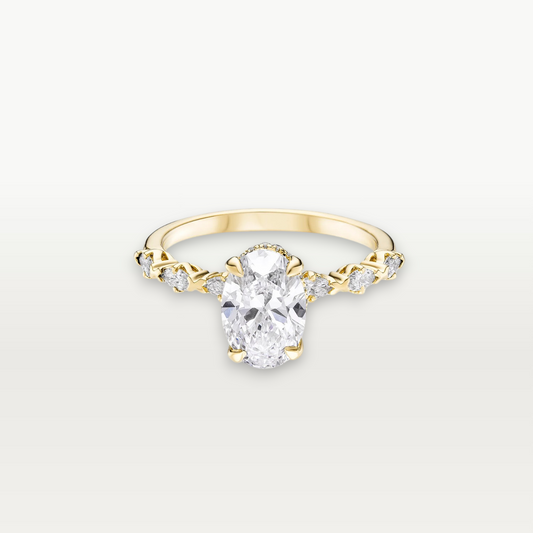
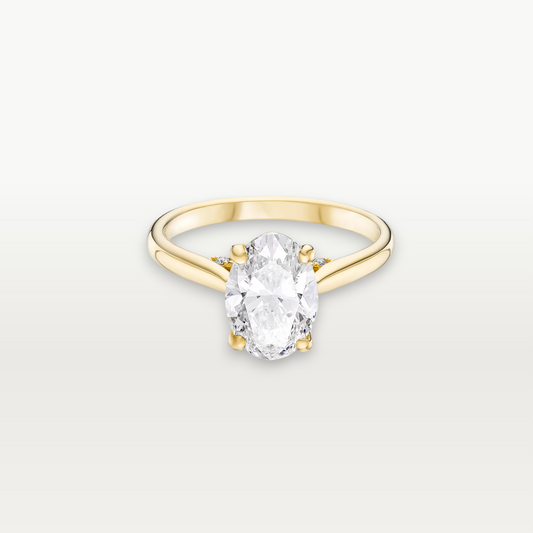
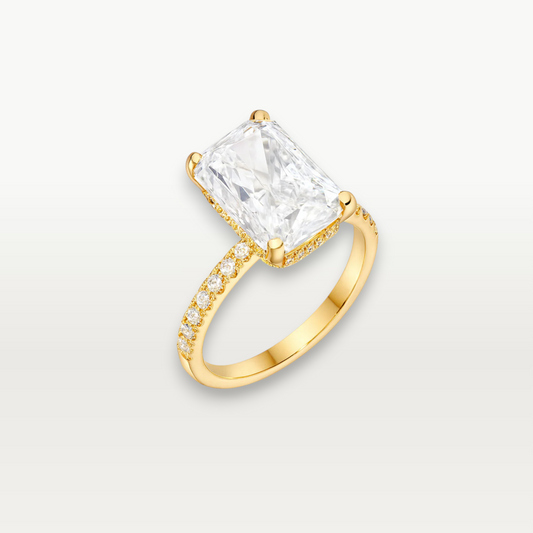
Does a Diamond Actually Sparkle Like That in Real Life?

This is a question I get asked this more than almost anything else, and I understand why.
You've spent hours watching diamond videos online. The slow-motion footage. The rainbow flashes. The way a single stone seems to contain entire galaxies of light. And at some point, sitting in front of your screen at midnight, a very reasonable thought crosses your mind: is any of that actually real, or am I about to spend thousands of pounds on something that only looks like that under a studio light?
It's not a silly question. It's one of the most honest questions a buyer can ask. So I want to answer it properly.
The short answer
Yes. A well-cut diamond absolutely sparkles in real life. The brilliance, the fire, the way it catches light from across a room, all of it is real.
But here's what most people aren't told: what a diamond looks like depends enormously on the light it's sitting in. And once you understand that, you'll never worry about this again.
Why diamonds look different in different light
A diamond doesn't produce its own light. It captures, bends, and returns the light around it. Which means the environment a diamond is sitting in completely changes how it performs.
There are two types of sparkle a diamond produces, and they behave differently:
Brilliance is the white light that bounces back from the stone – that clean, bright glow. You see this most clearly in daylight or under soft ambient light. It's what gives a diamond its presence, that quiet luminosity that makes it noticeable even when you're not trying to look at it.
Fire is the coloured light – those vivid flashes of red, blue, and orange that people often call "rainbow sparkle." Fire appears most dramatically under direct, single-source light: a spotlight, a camera flash, a candle. This is what professional photography is specifically designed to show.
Neither of these is more real than the other. Both are happening simultaneously, all the time. The light around you just determines which one you notice.
What professional diamond photography actually does
When a jewellery photographer sets up a shot, they're not cheating. They're showing you something real – they're just showing you the diamond in the most flattering possible light, in the most literal sense.
Most professional diamond images and videos are taken under ring lights, spot lighting, or flash. This maximises the fire and scintillation (the pattern of light and dark that creates that dramatic flickering effect when a diamond moves). It's the version of the diamond that's hardest to photograph and therefore the most impressive to show.
What it doesn't show you is the diamond in the grey British daylight of a Tuesday afternoon, because that's less visually dramatic – even though that's actually how the stone will look most of the time on her finger.
Does that mean the photography is misleading?
Not really. The sparkle you see in those videos is a genuine property of the stone. But it does mean you need to calibrate your expectations for the full picture.
What to actually expect, by lighting condition
Natural daylight – overcast This is the most common real-world condition in the UK. Under soft, diffused daylight, a diamond looks bright, clean, and luminous. The brilliance (white light) is at its best here. The fire is more subtle. The stone has a real presence and catches the eye, but it won't be putting on a dramatic light show.

Natural daylight – direct sun This is where things get the most beautiful (in my opinion). Under direct sunlight, both brilliance and fire activate strongly. A well-cut diamond in direct sun will flash and flicker noticeably. This is closer to what you see in outdoor photography.

Indoors, ambient lighting Under warm indoor lighting – lamps, overhead lights – a diamond looks elegant and glowing. Less dramatic than direct sun, but beautiful in its own quieter way. This is how the ring will look at dinner, at home, in the everyday moments.

Spotlights, camera flash, ring light This is the video version. Under direct, concentrated light sources, fire is at its most dramatic. Rainbow flashes, intense scintillation, the full cinematic effect. This is real, but it's the diamond showing off rather than behaving normally.

The feature that determines everything: cut quality
Here's the part I care most about, because it's the part most buyers don't know before they start looking.
The type and quality of light a diamond produces is almost entirely determined by its cut – not its carat weight, not its colour, not its clarity. Cut.
A diamond that has been cut to Excellent or Very Good standards has been proportioned so that light enters, reflects internally, and exits through the top of the stone in the most efficient way possible. This is what creates maximum brilliance and fire.
A poorly cut diamond, even one with exceptional colour and clarity, can look flat and dull even under perfect lighting conditions. Light enters the stone and leaks out through the bottom or sides instead of returning to your eye.
This is why, at Clementines, every diamond we work with is cut to Excellent or Very Good standards. Not because it sounds impressive on a certificate, but because it is the single decision that determines how the ring actually looks on her finger every day for the rest of her life.

Courtesy of the Gemmological Institute of America
Viewing a diamond before you buy – a few honest notes
On video: If you're viewing a diamond remotely, ask whoever is showing it to you to move it slowly under a direct light source (a desk lamp works well). This activates the fire and scintillation and gives you the most information about how the stone performs. A diamond that looks flat even under a direct light source is worth questioning.
On certificate images: Most GIA and IGI certificates include a standardised photograph of the stone. These images are taken under controlled conditions and are useful for comparing proportions, but they don't tell you much about how the diamond performs in life. Use them for the data, not the aesthetics.
In person: The best thing you can do is view the stone in more than one type of light – take it to a window, then back under the shop's overhead lighting. The difference tells you a great deal about the stone's character. A diamond that performs well in both conditions is a diamond worth choosing.
A note from me
The customer who asked me this question – she'd never seen a lab-grown diamond in person before and wanted to manage her expectations before her ring was finished. She was worried the sparkle might be all camera trickery.
When her ring arrived, she sent me a photo of it in the sunlight.
It was exactly what it was supposed to be.
That's what a well-cut diamond does. Not magic, physics. But the result, when you see it on your hand for the first time, feels a little like both.
If you're currently in the process of choosing a diamond and want a second opinion on how a stone is likely to perform in person, I'm always happy to help. Just get in touch, there's no obligation and no rush.